 Pay Securely

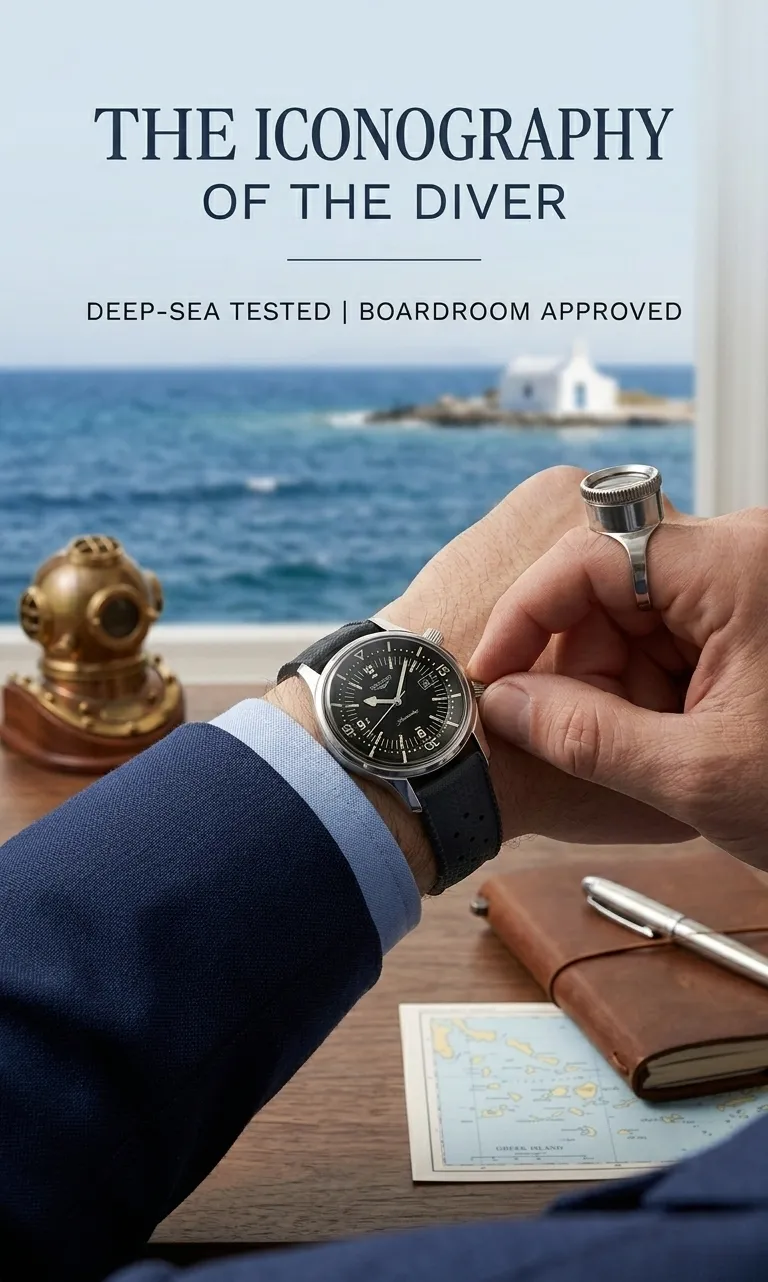
A History of How Tool Watches Became Style Icons
In the vast landscape of fine watchmaking, few silhouettes are as recognizable—or as universally coveted—as the professional diver’s watch. Its robust case, unidirectional rotating bezel, and luminous dial are design signatures that have transcended their original purpose.
Today, the diver is arguably the most versatile watch a collector can own. At WATCH Purchase, it is the “bridge” that connects our rugged, travel-ready models (perfect for a weekend in the Cyclades) with our refined, ‘suit-ready’ timepieces (ideal for a London boardroom).
But how did this quintessential “tool watch” move from the deep sea to the center of global culture?
The Mid-Century Revolution
The 1950s was the golden age of underwater exploration. It was a time of serious innovation, led by the military and commercial divers (like COMEX). Timekeeping underwater was a safety requirement, not a luxury. A diver needed to know exactly how much oxygen remained.
This demand created the iconic design language:
- A Highly Luminous Dial: For total readability in dark, silt-filled waters.
- The Unidirectional Bezel: A crucial innovation that allowed the wearer to track elapsed time, ensuring that even if the bezel was accidentally turned, it would only show less remaining time, not more (preventing a dangerous, oxygen-depleting mistake).
- The Oversized Crown: For easy operation with neoprene gloves.
It was a functional masterpiece, but one that was physically large and aesthetically simple. For decades, it remained strictly on the wrists of professionals.
The Transatlantic Cultural Shift (The 1970s and 80s)
The transition to a style icon happened slowly, then all at once. The first crack in the ‘tool’ definition came in 1962, but the full impact was felt in the decades that followed.
1. A ‘Suit-Ready’ Standard (The 1970s) The 1970s saw a rise in ‘Sport-Luxury.’ The definition of what a gentleman could wear with a tailored suit expanded. Watches like the Rolex Submariner (which we don’t carry, but whose influence is inescapable) were worn by cultural figures who valued the ‘rugged elegance’ it projected. It was a visible reminder of adventure, even when stuck in a windowless office.
2. The Impact of Longines & IWC (The Neo-Classic Era) As the 20th century closed, brands like IWC and Longines (the cornerstone of our collection with 120+ models) refined the diver. They began to produce models with slightly slimmer profiles and more polished finishing, without sacrificing mechanical depth. This made them visually compatible with tailored clothing.
The Diver Today: A Coded Status Symbol
At watchpurchase.com, the modern diver is a hybrid. It retains its full, specialized diving utility (the professional bezel, the 300M water resistance, the robust case), but it is curated for its aesthetic significance.
- The Power of Recognition: The unidirectional bezel is now a coded symbol of durability and active life. Wearing a classic Longines diver, for instance, isn’t just about reading the time; it is about projecting a lifestyle that is “Deep-Sea Tested, Boardroom Approved.”
- The “One Watch” Collection: This inherent versatility is why we curate over 550 models. A steel diver, like many in our Omega and Tudor collections, is truly a “one watch” solution. It is physically at home on a dive boat, but intellectually and visually at home at a business negotiation.
The Curation: Only the Icons
When you acquire a diver from the WATCH Purchase vault, you are buying a piece of this lineage. We curate these references because they represent the pinnacle of their category. They have earned their status through decades of proven utility and aesthetic refinement, guaranteed by WATCH Purchase